


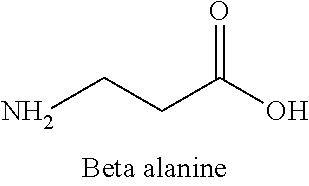
Beta Alanine Basics for Training and Performance
Have you ever taken a pre-workout drink and felt a tingling sensation in your skin within 10 to 20 minutes? That feeling is commonly called mild paresthesia, and beta-alanine is one of the ingredients most often associated with it.
Beta-alanine is a popular sports nutrition supplement because it may support high-intensity training performance, muscular endurance, and repeated hard efforts. It is not magic, and it does not replace training, nutrition, hydration, or recovery, but it can be useful when it fits the right goal.
What Is Beta-Alanine?
Beta-alanine is a non-essential amino acid. The body uses beta-alanine to help produce carnosine, a compound stored in muscle tissue. Carnosine plays a role in buffering acidity that builds up during hard training.
Beta-alanine can also be found through foods that contain carnosine, including chicken, beef, pork, and fish. Supplementing beta-alanine is one way athletes try to raise muscle carnosine levels over time.
Why Athletes Use Beta-Alanine
During intense exercise, the body produces hydrogen ions and other byproducts that contribute to that burning, fatiguing feeling. Carnosine helps buffer that environment inside the muscle. In simple terms, beta-alanine may help you tolerate repeated hard efforts a little better.
This is why beta-alanine is often used by people who train with sprints, intervals, weight training, circuits, combat sports, soccer, hockey, basketball, and other activities that require repeated bursts of intensity.
Potential Training Benefits
- May help delay muscular fatigue during high-intensity work.
- May support anaerobic endurance for repeated hard efforts.
- May help improve work capacity during challenging training blocks.
- May fit into strength, conditioning, running, field sports, and combat-sport routines.
What About the Tingling Feeling?
The tingling feeling from beta-alanine can be surprising if you have never experienced it before. For many healthy adults, mild paresthesia is temporary and harmless, but it can feel uncomfortable. Some people reduce the sensation by splitting servings across the day or choosing sustained-release forms.
How Long Does It Take to Work?
Beta-alanine is not usually a “take it once and instantly perform better” supplement. The goal is to build muscle carnosine levels over time. Many supplement protocols use multiple daily servings for several weeks. Some research has studied strategies over 4 to 10 weeks, and some users stay consistent for 8 to 12 weeks during a training phase.
Who Might Benefit?
- Weight lifters and bodybuilders
- MMA and combat-sport athletes
- Soccer, hockey, and basketball players
- Runners doing intervals or speed work
- Adults doing high-intensity circuits or conditioning
How Beta-Alanine Fits Into a Bigger Training Plan
Supplements work best when the basics are already in place: consistent training, enough protein, hydration, sleep, and recovery. For recovery-focused content, you may also like our guide to CBD topicals for active bodies and everyday recovery. For focus and calm during busy days, see our guide to CBD tinctures for focus, calm, and daily clarity.
Safety Notes
Talk with a healthcare professional before adding beta-alanine or any supplement if you have a medical condition, take medication, are pregnant or breastfeeding, or are unsure whether it is right for your situation.
Modern Beta-Alanine Training Notes
Beta-alanine has become common in pre-workout formulas, but it is not actually a stimulant like caffeine. That is an important distinction. Caffeine can make you feel more alert right away. Beta-alanine is typically used consistently over time to raise muscle carnosine levels, which may help with repeated high-intensity efforts.
The International Society of Sports Nutrition position stand on beta-alanine explains that supplementation can increase muscle carnosine and may improve exercise performance, especially in efforts that rely heavily on high-intensity work. That makes it most relevant for athletes and active adults doing intervals, circuits, combat sports, repeated sprints, and hard training blocks.
Who Beta-Alanine Is Best Suited For
- Good fit: intervals, HIIT, combat sports, repeated sprints, hockey, soccer, basketball, and hard circuit training.
- Possible fit: strength athletes during high-volume training blocks.
- Less obvious fit: very short maximal lifts or easy steady-state cardio.
- Not a replacement: sleep, nutrition, hydration, progressive training, and recovery basics.
How to Use Beta-Alanine More Intelligently
The biggest mistake is treating beta-alanine like a one-scoop magic switch before a workout. The better approach is to think in terms of consistency and total training phase. Many athletes use it during blocks where repeated high-intensity work matters most.
- Track the tingles: if the sensation is uncomfortable, smaller divided servings may feel better.
- Pair with training: use it during phases where hard repeated efforts are part of the plan.
- Avoid supplement stacking: do not assume every ingredient in a pre-workout is harmless just because one ingredient is common.
- Watch recovery: beta-alanine does not fix poor sleep, under-eating, dehydration, or overtraining.
- Check sport rules: competitive athletes should always verify supplement quality and third-party testing.
Beta-Alanine vs. Caffeine
Beta-alanine and caffeine often appear together in pre-workout products, but they do different jobs. Caffeine is about alertness, perceived effort, and stimulation. Beta-alanine is more about muscle carnosine and repeated high-intensity capacity over time. If someone feels a pre-workout “kick,” that is usually caffeine or another stimulant. If someone feels tingling, beta-alanine is often the reason.
For that reason, active adults should read labels carefully. A pre-workout may contain caffeine, beta-alanine, creatine, sweeteners, herbs, and other stimulants. The smarter move is to understand each ingredient instead of assuming the full scoop is automatically appropriate.
Research and Training References
For a detailed sports-nutrition reference, see the International Society of Sports Nutrition position stand on beta-alanine supplementation. For related QPT training content, review caffeine, energy, and focus, TRX suspension training, plyometric training basics, and CBD topicals for active-body recovery.
Beta-Alanine FAQ
Why does beta-alanine make my skin tingle?
The tingling feeling is commonly called paresthesia. It is a known beta-alanine effect and is often dose-related.
Does beta-alanine work instantly?
Beta-alanine is usually used consistently over time to help raise muscle carnosine levels. It is not just a one-time pre-workout stimulant.
Who should be cautious?
Anyone with a medical condition, medication use, pregnancy, breastfeeding, or uncertainty about supplements should speak with a healthcare professional first.
Practical Takeaways for Active Adults
Beta-alanine works best when it is part of a broader performance plan. Before adding supplements, build the foundation: consistent training, enough protein, smart hydration, quality sleep, and active recovery. If your workouts include intervals, circuits, strength training, or martial arts, pair performance work with recovery support like our guide to CBD topicals for active bodies.
- Start with training quality: clean reps, consistent effort, and progressive overload.
- Support recovery: sleep, mobility, hydration, and rest days matter.
- Think routine, not hype: supplements work best when the basics are already handled.
- Need product education? Visit the QPT CBD education hub or shop QPT CBD products.
Related Training and Recovery Guides
- Caffeine, energy, and focus for active adults
- TRX suspension training basics
- Plyometric training basics
- Body composition and sustainable wellness
- CBD topicals for active-body recovery
- THC-free CBD guidance for athletes
- Shop QPT CBD products
Reference: Hill CA, Harris RC, Kim HJ, Harris BD, Sale C, Boobis LH, Kim CK, Wise JA. “Influence of beta-alanine supplementation on skeletal muscle carnosine concentrations and high intensity cycling capacity.” Amino Acids. 2007.